Posts Tagged purchase rentals no money down

House Flipping FAQ

House Flipping FAQ

House flipping, the process of buying a property, renovating it, and selling it for a profit, can be a lucrative investment strategy. However, it also comes with its own set of advantages and disadvantages. Here’s a detailed look at the pros and cons of house flipping:

Pros of House Flipping

1. Potential for High Profits

  • Significant Returns: Successful flips can yield substantial profits, especially in markets with rising property values.
  • Quick Profits: Flipping can generate quick returns compared to other real estate investments, which may require long-term holding periods.

2. Tangible Investment

  • Control Over Investment: Unlike stocks or bonds, flipping houses allows you to have direct control over the improvements and sale process.
  • Improving Communities: Renovating distressed properties can enhance neighborhood appeal and potentially increase local property values.

3. Learning Experience

  • Skill Development: Flipping houses can help you gain valuable skills in construction, project management, and real estate market analysis.
  • Networking Opportunities: You’ll build relationships with contractors, real estate agents, and other professionals in the industry.

4. Tax Benefits

  • Deductions: Certain expenses, such as repair costs and interest on loans, can be deducted from your taxes, potentially lowering your taxable income.

Cons of House Flipping

1. Financial Risk

  • Market Fluctuations: Property values can decline, and you may end up selling the house for less than the purchase and renovation costs.
  • Unexpected Costs: Renovations often go over budget due to unforeseen issues, such as structural problems or delays.

2. Time-Consuming

  • Project Management: Managing a flip requires significant time and effort, from overseeing renovations to handling the sale.
  • Extended Holding Periods: If the property doesn’t sell quickly, you may incur additional holding costs like mortgage payments, property taxes, and utilities.

3. Stress and Complexity

  • Multiple Roles: As a flipper, you need to act as an investor, project manager, and sometimes even a real estate agent, which can be stressful and complex.
  • Regulatory Issues: Navigating zoning laws, building codes, and permit requirements can be challenging and time-consuming.

4. High Entry Costs

  • Initial Capital: Flipping requires significant upfront capital for the purchase and renovation of the property.
  • Financing Challenges: Securing financing for flips can be more difficult and expensive than for traditional mortgages, often involving higher interest rates and shorter loan terms.

Conclusion

House flipping can be a highly profitable venture if done correctly, offering the potential for significant returns and personal satisfaction. However, it also involves considerable risks, high costs, and demands substantial time and effort. To succeed in flipping houses, it’s crucial to conduct thorough market research, plan meticulously, and be prepared for unexpected challenges. This investment strategy is best suited for those with a strong understanding of the real estate market, construction knowledge, and the financial resilience to handle potential losses.

Here are some frequently asked questions about house flipping:

  • What is house flipping?

House flipping is the practice of buying a home, renovating it, and then selling it for a profit. Flipping houses can be a profitable investment, but it is important to do your research and have a solid plan before you get started.

  • How much profit can you make flipping a house?

The amount of profit you can make flipping a house depends on a number of factors, including the price you pay for the home, the cost of renovations, and the market conditions. However, in general, you can expect to make a profit of 10-20% on a successful flip.

  • What are the risks of house flipping?

There are a number of risks associated with house flipping, including:

* **Not making a profit.** If you buy a home for too much money or if the cost of renovations goes over budget, you could end up losing money on the flip.
* **Not being able to sell the house.** If the market conditions are not favorable, you may have difficulty selling the house for a profit.
* **Running into unexpected problems.** There is always the possibility that you will run into unexpected problems during the renovation process, which could delay the sale of the house or increase the cost of renovations.
  • What are the steps involved in house flipping?

The steps involved in house flipping are as follows:

1. **Find a property.** You can find properties to flip through a variety of channels, including real estate agents, online listings, and foreclosure auctions.
2. **Assess the property.** Once you have found a property, you need to assess its condition and determine how much it will cost to renovate.
3. **Get financing.** If you do not have the cash on hand to purchase the property, you will need to get financing.
4. **Make renovations.** Once you have financing in place, you can begin making renovations to the property.
5. **Market and sell the property.** Once the renovations are complete, you need to market and sell the property.

  • What are some tips for flipping houses?

Here are some tips for flipping houses:

* **Do your research.** Before you buy a property, make sure you do your research and understand the market conditions.
* **Find a good contractor.** A good contractor can make or break a flip. Make sure you find a contractor who is reliable and experienced.
* **Stay on budget.** It is easy to overspend on renovations. Make sure you create a budget and stick to it.
* **Market the property effectively.** The better you market the property, the more likely you are to sell it for a profit.

Give us a call today if you are interested in hard money loans for fix and flip, finishing construction, refinancing your mortgage, buying land, or need loans for other investment opportunities but have bad or no credit. Give Brad Loans a call today at (602) 999-9499.


How Does The Economy Impact Hard Money Loans?

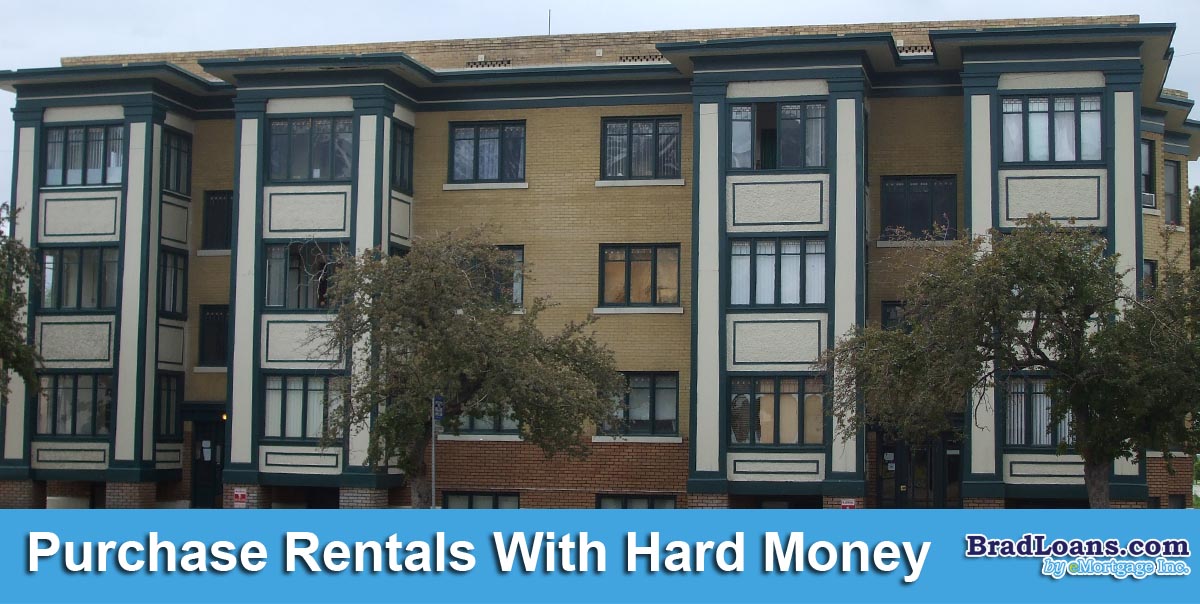
How To Purchase Rentals With No Money Down Hard Money Loans

The economy can have a significant impact on hard money loans, just as it does on traditional lending and financial markets. Hard money loans are typically short-term, asset-based loans that are often used by real estate investors and borrowers who may not qualify for traditional bank financing. Here’s how the economy can influence hard money loans:

  1. Interest Rates: Economic conditions, especially changes in central bank interest rates, can affect the interest rates on hard money loans. When the economy is booming and central banks raise interest rates to control inflation, hard money loan rates may also increase. Conversely, during economic downturns, interest rates may decrease.
  2. Credit Availability: In a strong economy, borrowers may have an easier time obtaining traditional bank loans, which offer lower interest rates and longer terms compared to hard money loans. However, during economic downturns or credit market crises, banks may tighten lending standards, making it more challenging for borrowers to qualify for bank loans and increasing the demand for hard money loans.
  3. Property Values: The overall economic health can influence property values, impacting the collateral used to secure hard money loans. In a strong economy, property values tend to rise, potentially providing more valuable collateral. In a weaker economy, property values may stagnate or decline, affecting the loan-to-value (LTV) ratio and the terms of hard money loans.
  4. Loan Terms: Economic conditions can affect the terms of hard money loans, including loan-to-value ratios, interest rates, and loan duration. During economic uncertainty or downturns, hard money lenders may be more conservative and reduce LTV ratios, increase interest rates, or offer shorter loan terms to mitigate risk.
  5. Borrower Demand: Economic factors can influence the demand for hard money loans. During economic booms, real estate investment and development projects may increase, driving up the demand for hard money loans. In contrast, during economic downturns, demand for hard money loans may decline as investment opportunities become scarcer.
  6. Lender Risk Tolerance: Hard money lenders are private individuals or entities, and their risk tolerance can be influenced by economic conditions. In prosperous economic times, lenders may be more willing to take on riskier projects or offer more favorable terms. During economic uncertainty, they may become more risk-averse and impose stricter lending criteria.
  7. Availability of Funds: Economic factors can affect the availability of funds for hard money lenders. When the economy is doing well, lenders may have more capital to invest in loans. Economic downturns can impact their ability to raise funds for lending, potentially reducing the supply of hard money loans.

It’s important to note that hard money loans are generally less influenced by economic conditions compared to traditional bank loans because they are primarily asset-based and focus on the value of the collateral. Borrowers who cannot qualify for traditional loans or need a quick financing solution may turn to hard money lenders, regardless of economic conditions.

Borrowers and investors considering hard money loans should carefully assess their financial situation, the potential risks, and the terms offered by lenders, especially in light of current economic conditions. Additionally, it’s advisable to work with reputable hard money lenders who have a history of responsible lending practices.

Hard Money Loan Rates

Hard money loan rates typically ranged from 7% to 15% or more, with some lenders charging even higher rates for riskier loans.

It’s essential to understand that hard money loans are often considered riskier than traditional bank loans, and as a result, they tend to have higher interest rates. To get the most accurate and up-to-date information on hard money loan rates, you should contact several hard money lenders in your area or conduct online research.

When inquiring about hard money loan rates, keep in mind that lenders may consider the following factors in determining the rate:

  1. Credit History: Some hard money lenders may take the borrower’s credit history into account, but this is generally less important than the property’s value and the loan’s LTV ratio.
  2. Property and Location: The type of property and its location can affect the interest rate. Lenders may charge different rates for residential properties, commercial properties, or properties in different regions.
  3. Loan-to-Value (LTV) Ratio: The LTV ratio, which is the ratio of the loan amount to the appraised value of the property, is a crucial factor. Lower LTV ratios (meaning the borrower is providing a larger down payment) may result in lower interest rates.
  4. Market Conditions: Economic conditions, local real estate market conditions, and lender competition can all influence hard money loan rates.
  5. Lender Policies: Different hard money lenders have different policies and risk assessments, which can lead to variations in the rates they offer.

To get the most accurate and up-to-date rates, reach out to hard money lenders directly, compare offers from multiple lenders, and thoroughly review the terms and conditions of each loan. Be prepared to provide details about your project, the property, and your financing needs to receive the most accurate rate quotes.

Please note that my information is based on the state of the industry as of September 2021, and market conditions may have changed since then. It’s important to do your due diligence and work with a reputable and experienced hard money lender to secure the most suitable loan for your specific situation.

Give us a call today if you are interested in hard money loans for fix and flip, finishing construction, refinancing your mortgage, buying land, or need loans for other investment opportunities but have bad or no credit. Give Brad Loans a call today at (602) 999-9499.

House Flipping FAQ

House Flipping FAQ

Here are some frequently asked questions about house flipping:

  • What is house flipping?

House flipping is the practice of buying a home, renovating it, and then selling it for a profit. Flipping houses can be a profitable investment, but it is important to do your research and have a solid plan before you get started.

  • How much profit can you make flipping a house?

The amount of profit you can make flipping a house depends on a number of factors, including the price you pay for the home, the cost of renovations, and the market conditions. However, in general, you can expect to make a profit of 10-20% on a successful flip.

  • What are the risks of house flipping?

There are a number of risks associated with house flipping, including:

* **Not making a profit.** If you buy a home for too much money or if the cost of renovations goes over budget, you could end up losing money on the flip.
* **Not being able to sell the house.** If the market conditions are not favorable, you may have difficulty selling the house for a profit.
* **Running into unexpected problems.** There is always the possibility that you will run into unexpected problems during the renovation process, which could delay the sale of the house or increase the cost of renovations.
  • What are the steps involved in house flipping?

The steps involved in house flipping are as follows:

1. **Find a property.** You can find properties to flip through a variety of channels, including real estate agents, online listings, and foreclosure auctions.
2. **Assess the property.** Once you have found a property, you need to assess its condition and determine how much it will cost to renovate.
3. **Get financing.** If you do not have the cash on hand to purchase the property, you will need to get financing.
4. **Make renovations.** Once you have financing in place, you can begin making renovations to the property.
5. **Market and sell the property.** Once the renovations are complete, you need to market and sell the property.

  • What are some tips for flipping houses?

Here are some tips for flipping houses:

* **Do your research.** Before you buy a property, make sure you do your research and understand the market conditions.
* **Find a good contractor.** A good contractor can make or break a flip. Make sure you find a contractor who is reliable and experienced.
* **Stay on budget.** It is easy to overspend on renovations. Make sure you create a budget and stick to it.
* **Market the property effectively.** The better you market the property, the more likely you are to sell it for a profit.

Give us a call today if you are interested in hard money loans for fix and flip, finishing construction, refinancing your mortgage, buying land, or need loans for other investment opportunities but have bad or no credit. Give Brad Loans a call today at (602) 999-9499.

Translate »