Sell or Refinance? Building a Hard Money Loan Exit Strategy in Arizona
A hard money loan should be entered with a clear way out. The property may secure the debt, but the borrower still needs a practical plan for repaying the balance before the maturity date. For many Arizona investors, the main choice is selling the completed property or refinancing it into longer term financing.
That choice affects the repair plan, timeline, cash reserves and loan structure from the beginning. An exit strategy written after the project is already behind schedule is usually much weaker than one tested before closing.
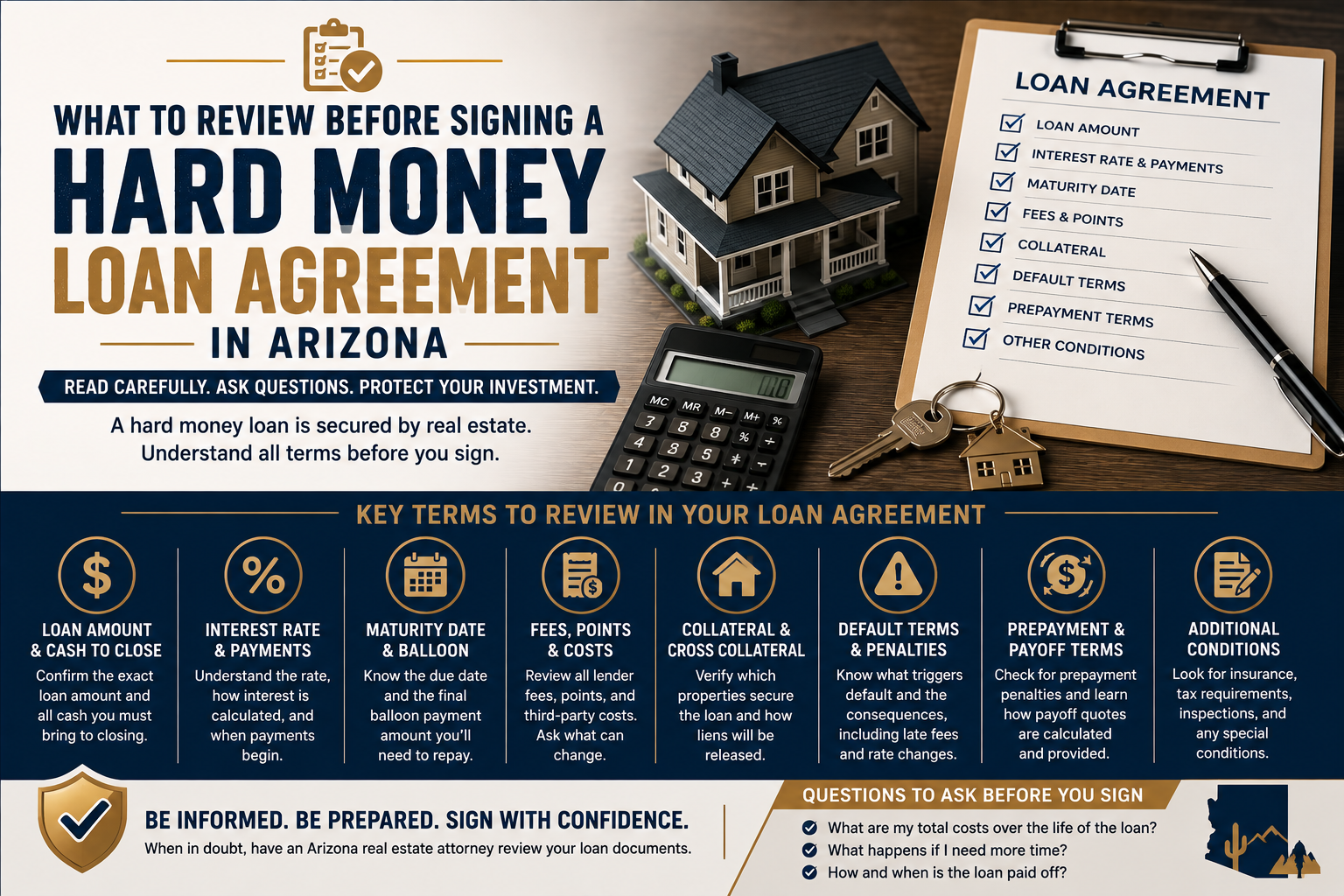
Understand the Maturity Date
Some short term real estate loans require monthly interest payments with the unpaid principal due at the end. That final amount may be described as a balloon payment. The Consumer Financial Protection Bureau defines a balloon payment as a large one time payment due at the end of the loan term.
Read the note carefully and record the exact maturity date. Do not rely on a general memory that the loan lasts “about a year.” Build the project calendar around the written date and leave room for delays.
Selling the Property Can Be the Cleanest Exit
A fix and flip investor commonly repays the loan from sale proceeds. This route works when the repair budget is realistic, the after repair value is supported and the finished property can be listed with enough time to attract a buyer.
Work backward from the maturity date. Allow time for renovation, permits, final cleaning, listing preparation, marketing, buyer inspections, appraisal and closing. A signed purchase contract is not the same as a completed payoff because the buyer’s financing can still be delayed.
Price the finished property from current comparable sales rather than the profit you hope to make. An unrealistic asking price can turn a planned sale exit into an expensive holding problem.
Refinancing Requires Different Preparation
An investor who wants to keep the property may plan to refinance into a rental, commercial or conventional loan. The new lender may review credit, income, debt, leases, property condition, reserves and seasoning requirements differently from the hard money lender.
Begin talking with the long term lender early. Ask what property condition, occupancy, documentation and appraisal will be required. If the refinance depends on rental income, understand when a signed lease must be in place and how the new lender calculates that income.
Capital Fund 1 notes that a conventional refinance can take considerably longer than a hard money closing. The exact timeline varies, so the borrower should not wait until the final weeks of the current loan.
Build a Second Exit
Every project should have a reasonable alternative. A flipper may plan to sell but keep a rental refinance option if market activity slows. A buy and hold investor may plan to refinance but remain willing to sell if the property does not qualify or the new payment is not workable.
A backup plan must be more than a hopeful sentence. Check whether the likely rent supports the proposed refinance, whether the property could sell at a lower price and whether the borrower has cash to cover an extended holding period.
Watch for Changes That Weaken the Plan
Construction delays, cost overruns, a lower appraisal or slower sales market can change the exit. Review the numbers throughout the project rather than waiting for the original schedule to fail.
If the expected sale price drops, calculate the result after loan payoff and selling costs. If refinancing becomes less likely, ask why. Credit, income, property condition or debt may need attention before another lender can approve the new loan.
Communicate Before the Loan Comes Due
Brad Loans advises borrowers whose exit is not a property sale to make contact at least six months before the all due date to discuss possible refinancing, an extension if one is available, or financing elsewhere.
An extension is not guaranteed. It may involve new fees, conditions or underwriting. Early communication gives the borrower more choices than a call made after maturity.
Discuss Your Exit Strategy With Brad Loans
Brad Loans by eMortgage provides hard money, fix and flip, bridge, purchase and refinance options for Arizona property owners and investors. Each loan and property is reviewed individually, so the proposed repayment plan should be part of the first conversation. Call 602 999 9499 to discuss whether a sale, refinance or another documented source of repayment fits the property and requested loan term.
References
Brad Loans Frequently Asked Questions
Consumer Financial Protection Bureau Balloon Payment Guide