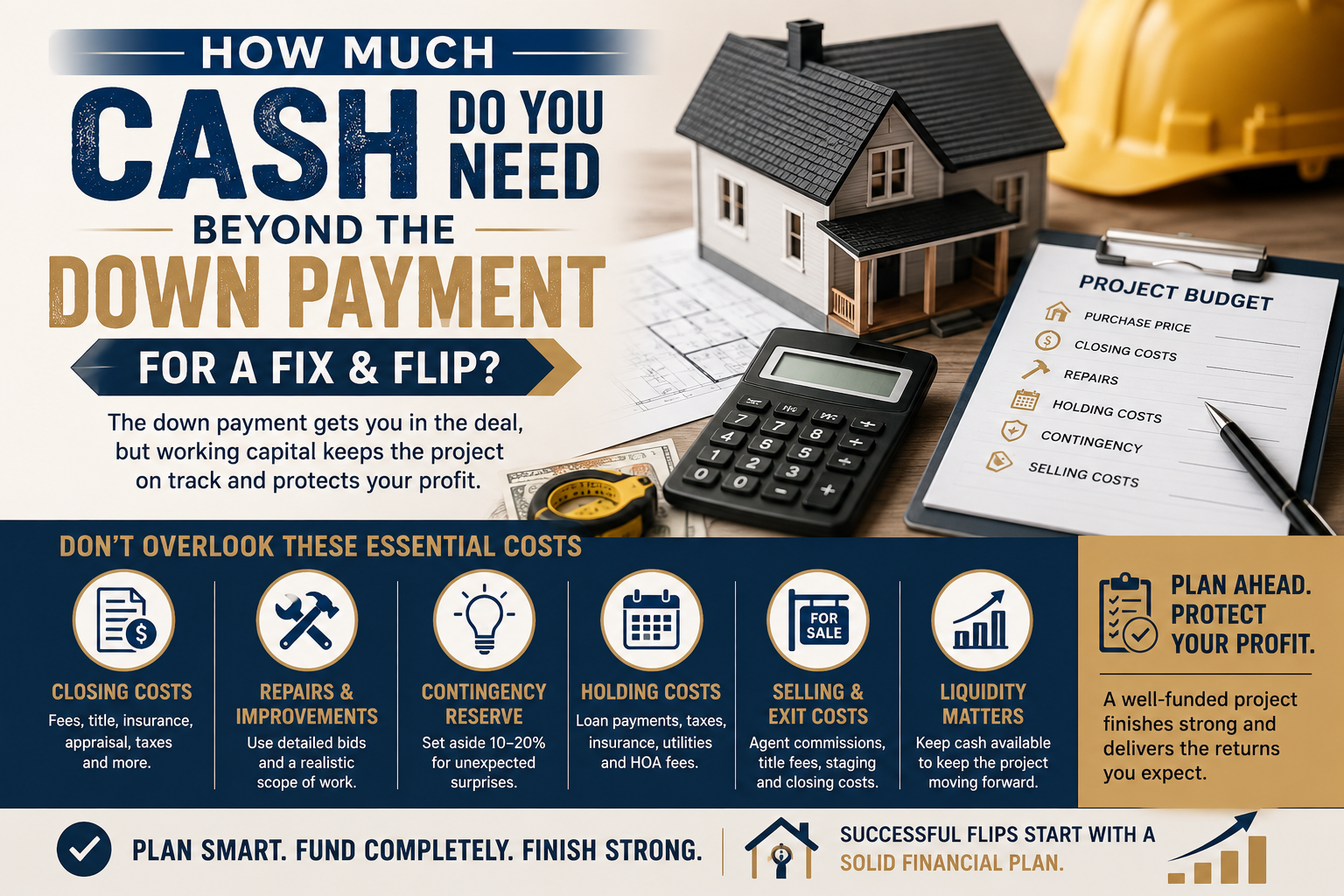
How Much Cash Do You Need Beyond the Down Payment for a Fix and Flip?
The down payment is the most visible cash requirement in a fix and flip, but it is not the only money an investor needs. A property can be purchased successfully and still run into trouble a few weeks later because the borrower has not reserved enough for closing, repairs, utilities or loan payments.
Brad Loans asks investor borrowers to show both the down payment and available working capital. That distinction matters. The down payment helps complete the purchase. Working capital keeps the project moving until the property is sold or refinanced.
Start With the Full Cash to Close
Ask for an estimate that separates the down payment from the other charges due at closing. Depending on the loan and property, those expenses may include lender fees, appraisal, title work, escrow charges, recording, insurance and prepaid taxes or interest.
Do not assume every fee can be added to the loan. Some costs may need to be paid before closing or brought to the title company in verified funds. Keep a margin between the estimated amount and the cash actually available.
Contractor Deposits Arrive Quickly
A contractor may need money for scheduling, demolition, permits, dumpsters, materials or subcontractors soon after the purchase closes. If the loan includes renovation funds, find out how and when those funds are released. Some programs reimburse completed work rather than advancing every dollar at the beginning.
The investor therefore needs enough liquidity to start the project and keep work moving between inspections or draws. A contractor who has to stop while waiting for money can push the entire schedule back. Competitor application checklists commonly request contractor bids, repair timelines and evidence of borrower reserves for this reason.
Build a Line by Line Repair Budget
A single figure marked “rehab” is not enough. Break the work into roofing, electrical, plumbing, heating and cooling, flooring, cabinets, paint, landscaping and other major categories. Include labor, materials, permit costs, debris removal and sales tax where applicable.
Use contractor bids and a property inspection rather than a rough guess based on another house. Older Phoenix Valley homes may hide electrical, sewer, roof or air conditioning problems that are not visible during a quick walk through.
Keep a Contingency for Surprises
A contingency is not spare money for upgraded finishes. It is protection against conditions that could not be confirmed before demolition. The amount should reflect the property’s age, condition, inspection findings and project complexity.
If every available dollar is assigned before work begins, one damaged sewer line or failed air conditioning system can stop progress. A realistic reserve gives the investor choices when the unexpected appears.
Count the Monthly Holding Costs
The property continues to cost money while it is being repaired and marketed. Include loan payments, property taxes, insurance, electricity, water, landscaping, pool service, security and homeowners association charges when they apply.
Estimate the holding period conservatively. A three month renovation followed by a quick sale may be the goal, but permits, contractor delays, inspections or buyer financing can extend the timeline. Run the budget for a slower outcome as well as the ideal one.
Remember the Cost of Selling or Refinancing
A completed house still has expenses before the hard money loan is paid off. A sale may involve agent compensation, title charges, repairs requested by the buyer, staging, cleaning and concessions. A refinance can require a new appraisal, lender fees, reserves and time for underwriting.
These costs belong in the project budget from the beginning because they affect the amount of profit or equity remaining after the loan is repaid.
Document the Source of Funds
Lenders may ask for bank statements showing the down payment, closing funds and working capital. Keep project money in accounts that are easy to document. Large transfers or recent deposits may require an explanation.
If another investor or business partner is contributing cash, discuss the ownership and repayment arrangement before applying. The lender and title company need to know who is involved in the transaction.
Plan Fix and Flip Financing With Brad Loans
Brad Loans by eMortgage offers Arizona fix and flip and investment property loans, including case by case options involving cross collateral when sufficient equity is available in another property. The team can review the purchase price, proposed repairs, available cash and exit plan before the investor commits to a deal. Call 602 999 9499 to discuss the complete funding picture, not just the down payment.
References
Brad Loans Fix and Flip Loans
Brad Loans How to Qualify
Brad Loans Loan Programs
Groundfloor Hard Money Loan Checklist
LendingBee Hard Money Loan Checklist