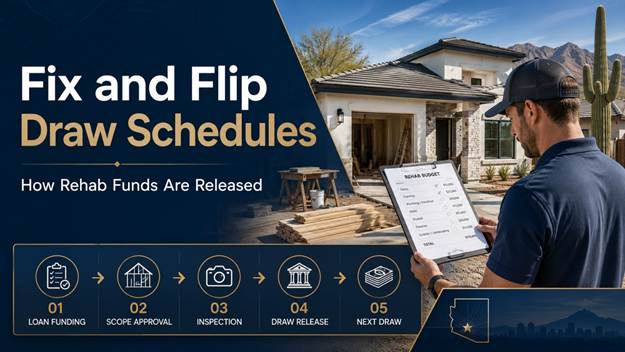
Fix and Flip Draw Schedules: How Rehab Funds Are Released
A fix and flip loan may cover more than the purchase of an Arizona property. Some programs also finance part of the renovation budget. The key detail is that repair money is not always handed to the investor at closing. It may be held back and released only after agreed work has been completed.
That arrangement protects the lender, but it also affects the investor’s cash flow. Before accepting a loan, understand when funds become available, what proof is required and how much working capital you need.
What Is a Fix and Flip Draw Schedule?
A draw schedule is the written plan for releasing renovation funds. Depending on the lender and project, money may be released after several construction stages or through one holdback paid after the approved work is complete.
The schedule should identify the repair budget, the work connected to each release and the process used to confirm completion. It may also explain inspection charges, minimum draw amounts and whether the borrower must pay contractors first.
Brad Loans describes a renovation program in which up to 70 percent of the combined purchase price and estimated renovation cost may be financed on a case by case basis. The purchase portion is released at closing, while financed renovation proceeds are held in escrow and released after the renovations are complete.
Why Lenders Hold Renovation Funds
A lender approves the loan partly because the planned repairs are expected to protect or improve the property’s value. Holding the funds helps make sure the money is used for the work in the approved budget.
For the borrower, the tradeoff is simple. The loan can include repair money, but the investor may still need enough cash or contractor credit to keep the project moving until funds are released.
Build the Scope of Work Carefully
The scope of work should be specific enough for a lender, contractor and inspector to understand what will be completed. Separate major items such as roofing, air conditioning, electrical work, plumbing, flooring, cabinets, paint and landscaping.
Use realistic costs based on written bids when possible. An estimate that is too low may leave the investor paying the difference. An inflated budget can also weaken the deal because the lender will compare total project cost with the purchase price and expected after repair value.
Arizona projects often reveal heat related problems with roofs, cooling systems, windows and exterior surfaces. Inspect those items before finalizing the budget.
Ask How a Release Is Approved
Do not assume that sending an invoice automatically produces payment. Ask whether the lender requires photographs, receipts, lien waivers, a site inspection or confirmation from an independent inspector.
Find out how long review and funding normally take after a complete request. A contractor who expects immediate payment may not be willing to wait for the lender’s process. Discuss the arrangement before work begins.
The loan documents should also explain what happens if the scope changes. Moving money between budget categories may require approval.
Keep Working Capital Available
Even when renovation costs are included in the loan, an investor should keep a reserve. Materials may require deposits. Contractors may bill before a release arrives. Hidden damage can appear after demolition, and holding costs continue while the property is being repaired.
Include interest, insurance, taxes, utilities, permits and possible delays in the project budget. A draw schedule does not remove the need for cash management.
Review the Exit Plan Before Closing
The renovation timeline should fit comfortably inside the loan term. Delays can reduce profit and bring the balloon payment closer before the property is ready to sell or refinance.
Compare the construction schedule, expected listing date and maturity date. Leave room for inspections, negotiations and a slower closing than expected. A strong project needs both a repair plan and a realistic repayment plan.
Discuss Arizona Fix and Flip Financing With Brad Loans
Brad Loans by eMortgage offers Arizona hard money financing for property purchases, fix and flip projects and renovation costs on qualifying transactions. Every property and budget is reviewed individually, so speak with the team before making assumptions about funding or release terms. Call 602-999-9499 to discuss your project and the loan structure that may be available.
References
Brad Loans: Frequently Asked Questions